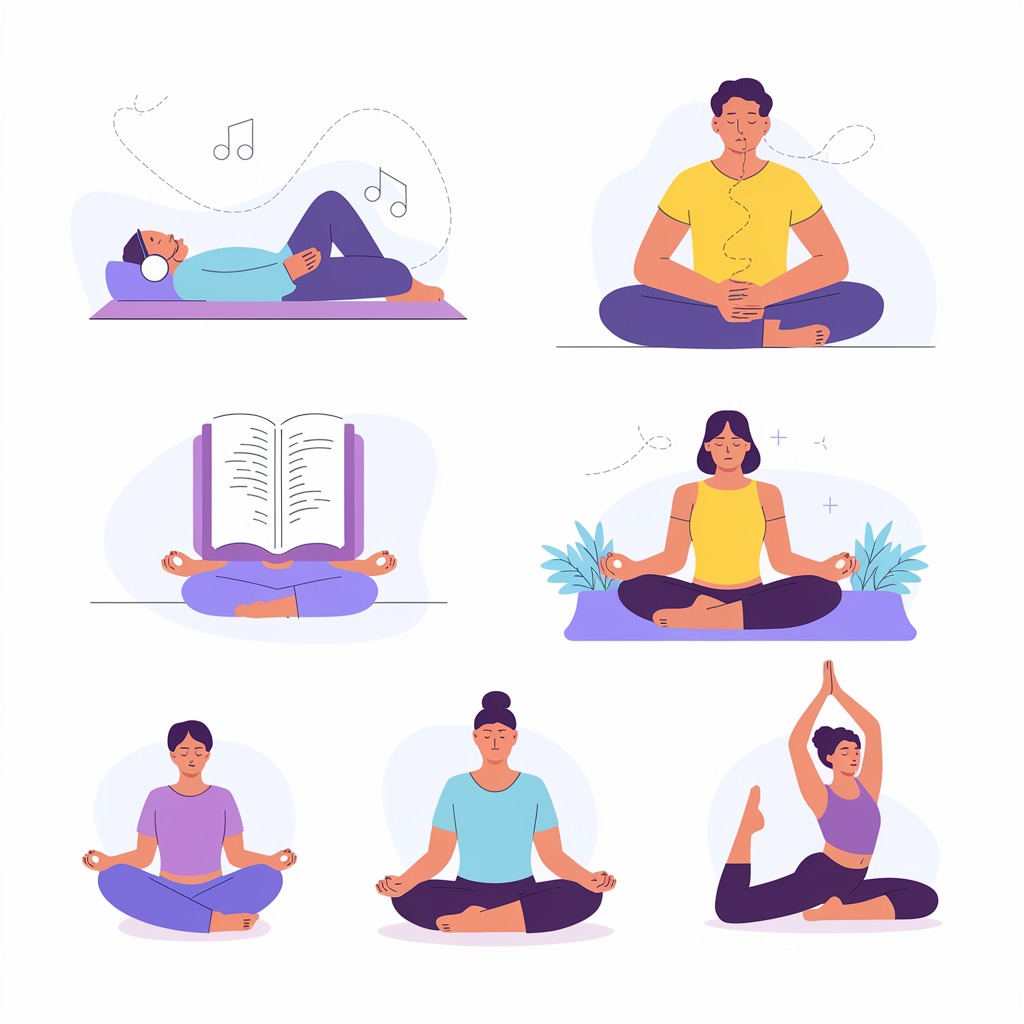
In today’s fast-paced world, stress seems to have become an unwelcome companion in our lives. Deadlines, family responsibilities, financial challenges—it all adds up. While some stress is normal, chronic stress can take a toll on your mental and physical health. The good news? Relaxation techniques can work wonders in reducing stress and promoting well-being. Let’s explore six effective methods to calm your mind and body, one deep breath at a time.
1. Deep Breathing
Deep breathing is one of the simplest and most effective ways to relax. It helps to lower your heart rate and reduce stress hormones in your body. Here’s how you can do it:
- Find a quiet space where you won’t be disturbed.
- Sit or lie down in a comfortable position.
- Inhale deeply through your nose for a count of four, allowing your abdomen to expand.
- Hold your breath for a count of four.
- Exhale slowly through your mouth for a count of six.
Repeat this cycle 5-10 times. Deep breathing not only calms your mind but also helps you refocus, making it an ideal technique during work breaks.
2. Progressive Muscle Relaxation (PMR)
Progressive Muscle Relaxation involves tensing and then releasing different muscle groups in your body. It’s especially effective for releasing physical tension that builds up due to stress.
Here’s how you can practice PMR:
- Sit or lie down in a comfortable position.
- Starting from your toes, tense the muscles for about 5 seconds.
- Release the tension slowly and focus on the feeling of relaxation.
- Work your way upward, moving through your legs, abdomen, chest, arms, and face.
This practice not only alleviates muscle tension but also enhances your awareness of how stress affects your body.
3. Mindfulness Meditation
Mindfulness meditation involves focusing on the present moment without judgment. It’s a powerful way to reduce stress and improve your overall mental health.
To get started:
- Find a quiet place and sit comfortably.
- Close your eyes and focus on your breath.
- Observe your thoughts as they come and go, but don’t dwell on them.
- If your mind wanders, gently bring your focus back to your breath.
Practicing mindfulness for just 10-15 minutes a day can significantly lower stress levels and improve your emotional resilience.
4. Guided Imagery
Guided imagery is a relaxation technique that uses your imagination to take you to a peaceful place or situation. It’s like a mental vacation, offering a temporary escape from stress.
Here’s how to try it:
- Close your eyes and take a few deep breaths.
- Imagine a place where you feel completely relaxed. It could be a beach, a forest, or even your cozy bedroom.
- Use all your senses to make the image as vivid as possible. Imagine the sound of waves, the smell of pine trees, or the softness of your favorite blanket.
- Spend a few minutes in this mental sanctuary before gently bringing yourself back to the present.
Guided imagery is a wonderful tool to recharge your mind during a hectic day.
5. Yoga
Yoga combines physical postures, breathing exercises, and meditation to create a holistic stress-relief practice. It’s not only great for your flexibility and strength but also for calming your mind.
You don’t need to be an expert to reap the benefits. Start with simple poses like Child’s Pose, Downward Dog, or Cat-Cow stretches. Pair these movements with deep breathing for maximum relaxation.
Joining a yoga class or following online tutorials can also provide you with guidance and motivation to stay consistent.
6. Listening to Music
Music has an incredible ability to influence our emotions. Listening to calming music can reduce stress, lower blood pressure, and even improve your mood.
Here’s how to make the most of this technique:
- Create a playlist of soothing songs or nature sounds.
- Find a quiet spot where you can sit or lie down comfortably.
- Close your eyes and immerse yourself in the music. Focus on the melody, rhythm, or lyrics.
Classical music, ambient sounds, or even your favorite soft rock ballads can do the trick. The key is to find what relaxes you personally.
Final Thoughts
Stress is an inevitable part of life, but how we respond to it makes all the difference. Incorporating these relaxation techniques into your daily routine can help you take control of stress and improve your quality of life. Start small—even dedicating five minutes to deep breathing or guided imagery can create a ripple effect of calmness.
Remember, self-care isn’t selfish; it’s essential. Take time to relax, recharge, and reconnect with yourself. You deserve it!

Leave a Reply